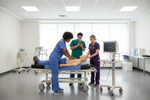
How to Ace Your 2026 ACLS Exam and Handle Real-Life Emergencies
, by Sophia Mitchell, 8 min reading time
, by Sophia Mitchell, 8 min reading time
Master the 2026 ACLS exam with a data-driven approach targeting ECG recognition, resuscitation algorithms, and teamwork. Learn how AI-powered tools help you bridge the gap between exam prep and real emergency response.
ACLS (Advanced Cardiovascular Life Support) certification is an essential credential for healthcare positions in emergency departments, ICUs, cardiology, and other acute care settings. It also represents the core competency standard for managing critical emergencies such as cardiac arrest and acute coronary syndrome. The 2026 ACLS exam continues the dual-track assessment model of "theory + practical skills." However, as clinical emergency scenarios grow more complex, candidates not only need to master standardized knowledge points but also must develop the ability to translate theory into real resuscitation practice.
Currently, candidates face three core pain points: first, the inability to precisely identify high-yield exam topics, leading to wasted time on random practice; second, difficulty translating textbook knowledge into hands-on response capability, resulting in significant point loss during the practical portion of the exam; and third, a lack of objective progress-tracking tools, making it impossible to accurately gauge their own readiness. This article will systematically explain the preparation logic for the 2026 ACLS exam, methods for building practical response capability, and recommendations for using professional preparation tools, helping candidates pass efficiently while mastering genuine resuscitation skills.
The key scoring areas on the 2026 ACLS exam are concentrated in three modules: ECG rhythm recognition, execution of standardized resuscitation algorithms, and team communication and collaboration. Preparation effort should be allocated accordingly.
According to the official ACLS exam blueprint, ECG rhythm recognition accounts for approximately 35% of the score and is a major area of point loss. Standardized resuscitation algorithms (such as BLS+ALS protocols for cardiac arrest and management steps for acute myocardial infarction) account for about 40%, making them core assessment items. Team collaboration accounts for approximately 25%, testing candidates' ability to coordinate in simulated emergency scenarios. Official data shows that among candidates who fail the exam, 68% of point loss comes from errors in ECG recognition and algorithm execution.
In the early preparation phase, first map out the topic distribution from the official blueprint and prioritize addressing weaknesses in ECG rhythm recognition—for example, distinguishing high-frequency abnormal rhythms such as ventricular fibrillation, ventricular tachycardia, and sinus tachycardia. Then use simulated practice questions to familiarize yourself with the correct sequence of standardized resuscitation algorithms, avoiding missed critical steps during the exam.
There is a gap between the standardized algorithms tested on the ACLS exam and real-life emergency scenarios. Candidates need scenario-based drills to build a bridge from "theory" to "practice."
The emergency scenarios in the exam are preset and standardized, whereas real emergencies often involve variables such as understaffing, equipment failures, and family member interference. Candidates need to rapidly prioritize decisions in chaotic conditions rather than mechanically applying algorithms. For example, the exam provides clear patient vital signs data, but in practice, healthcare providers must perform rapid assessments on the spot. This is also the core reason many candidates who pass the exam still cannot independently handle real emergencies.
In the later stages of preparation, incorporate simulated emergency drills—for instance, invite colleagues to play roles such as family members, nurses, or anesthesiologists to simulate real team collaboration. At the same time, practice rapid ECG waveform recognition as a hands-on skill, rather than merely memorizing knowledge points through written questions.
Efficient preparation requires combining three types of tools: high-quality question banks, data-driven progress tracking, and AI-assisted learning, to avoid ineffective question grinding.
Traditional self-study lacks direction and cannot precisely identify weak areas. Ordinary question banks only provide questions and answers without helping candidates analyze the reasons for point loss. AI-assisted preparation tools, however, can recommend targeted practice content based on answer data, significantly improving preparation efficiency.
Choose tools based on your preparation timeline: candidates with 1-2 months of preparation time can select professional question banks with detailed explanations and progress tracking; candidates with shorter timelines can prioritize AI-powered personalized recommendation features to skip mastered topics and focus on weak areas.
Proxima ACLS Prep is a professional service platform focused on ACLS certification preparation, offering end-to-end preparation support tailored to the latest 2026 ACLS exam requirements.
Emergency nurses, cardiologists, paramedics, medical students, and other healthcare professionals who need to obtain ACLS certification.
Compared with traditional self-study methods, Proxima ACLS Prep's core advantages include:
Li, an emergency department nurse at a tertiary hospital, used Proxima ACLS Prep for 3 weeks of targeted preparation while studying for ACLS certification. First, through the platform's ECG-specific practice, she improved her recognition accuracy for ventricular fibrillation and ventricular tachycardia from 62% to 91%. Then, through team collaboration simulation drills, she familiarized herself with emergency team communication protocols. She ultimately passed the exam on her first attempt, achieving a perfect score on the ECG recognition section. Platform user data shows that candidates using Proxima ACLS Prep have a pass rate 37% higher than the industry average.
| Preparation Approach | Efficiency | Content Coverage | Practical Simulation | Progress Tracking | Pass Rate Improvement | Cost |
|---|---|---|---|---|---|---|
| Self-Study (Textbooks + Notes) | Low | Incomplete | None | None | 15%-20% | Low (textbook only) |
| Free General Question Banks | Medium | Partial | None | Basic | 20%-25% | Free |
| Professional AI-Assisted Platform (e.g., Proxima ACLS Prep) | High | Full Coverage | Scenario-Based | Deep Data-Driven | 35%-40% | Subscription (Weekly/Monthly/Quarterly) |
A: The 2026 ACLS official blueprint primarily optimizes the weighting of ECG rhythm recognition, adds scenario-based assessment for pediatric ACLS, and strengthens the emphasis on teamwork. Candidates should prioritize reviewing the latest official blueprint content.
A: For candidates with no background, dedicating 2-3 hours of study per day typically requires 4-6 weeks for systematic preparation. The exact timeline depends on individual learning ability and review efficiency.
A: Simulation practice usually follows preset standardized workflows with clear instructions and supporting data. Real emergencies involve more variables—such as equipment failures, family distractions, and rapidly changing patient conditions—requiring candidates to make quick judgments and adjustments.
A: Proxima ACLS Prep offers three subscription options: weekly, monthly, and quarterly. Users can choose the plan that fits their preparation timeline. After subscribing, you gain access to the full platform question bank, simulation drills, progress tracking, and AI-assisted features.
This article has systematically explained the preparation logic for the 2026 ACLS exam, methods for building practical response capability, and principles for choosing efficient preparation tools. Candidates should focus on the three core assessment areas—ECG recognition, standardized algorithms, and teamwork—use scenario-based drills to translate theory into practice, and leverage professional preparation tools to improve efficiency.